Is being a virtual assistant worth it? If you’re craving flexibility and side-eyeing that 9-5, maybe. But it’s not all laptop-on-the-porch vibes. This post breaks down the honest pros, the real cons, and who this career actually works for. You’ll know if it’s your next move or a hard pass.
Table of Contents
You’ve been scrolling Instagram, seeing posts about women working from their couch in yoga pants, making real money as virtual assistants. And you’re wondering: is being a virtual assistant worth it, or is this another one of those “looks better online than it actually is” situations?
Here’s the truth: Being a VA can be incredibly flexible, rewarding, and profitable. But it’s also work. Real work. It’s not passive income. It’s not “laptop on the beach” 24/7. And it’s definitely not for everyone.
So let’s cut through the Instagram highlight reel and talk about what being a virtual assistant is actually like—the good, the bad, and the “why didn’t anyone warn me about this” parts.
By the end of this post, you’ll know if this career is right for you or if you should keep looking!
Let’s Be Honest: Is Being a Virtual Assistant Worth It?
Short answer? For most people, yes! But with some big caveats.
Being a virtual assistant is worth it if you value flexibility over a guaranteed paycheck, if you’re willing to learn as you go, and if you’re okay with the fact that your income might fluctuate (especially at first).
It’s not worth it if you need absolute financial predictability, hate the idea of finding your own clients, or can’t handle working solo most of the time.
Let’s break it down so you can decide for yourself.
The Pros of Being a Virtual Assistant
There’s a reason so many women are pivoting into VA work. The benefits are real.
You Control Your Schedule (Mostly)
This is the big one. As a VA, you’re not clocking in at 9 AM and leaving at 5 PM. You decide when you work.
Want to work while your kids are at school? Done. Prefer to work early mornings or late nights? That’s up to you. Need to take a Wednesday afternoon off for a doctor’s appointment? You don’t have to ask permission or use PTO.
Now, let’s be real: You’re not 100% free to do whatever you want whenever you want. If you have a client call at 2 PM on Tuesday, you need to be there. If a client needs something urgent, you’ll probably need to handle it.
But compared to a traditional job? The flexibility is unmatched.
Low Startup Costs
You don’t need thousands of dollars to become a virtual assistant. You need a laptop, internet, and maybe a few basic tools (like a scheduling app or project management software).
That’s it.
No inventory. No storefront. No expensive equipment. This makes it one of the most accessible businesses you can start.
Some VAs invest in courses or templates to speed up their learning curve, but that’s optional. You can absolutely start with zero upfront investment if you need to.
You Set Your Own Rates
When you work a traditional job, someone else decides what you’re worth. As a VA, you decide.
If you’re crushing it for a client and delivering killer results, you can raise your rates. You don’t have to wait for your boss to remember you exist during annual review season.
Want to make $3,000 a month? $6,000? $10,000? Your income is directly tied to how you price your services, how many clients you take on, and how you structure your offers.
That level of control? Priceless.
Work From Literally Anywhere
As long as you have Wi-Fi, you can work. Your couch. A coffee shop. Your parents’ house while you’re visiting for the holidays. A different state if you decide to move.
You’re not tied to a physical office or a specific city. If your partner gets a job offer across the country, you don’t have to quit your career. You just pack up your laptop and go.
For moms, this is a game-changer. You can be home when your kids get off the bus. You can work during naptime. You’re not missing everything because you’re stuck in an office.
Choose Your Clients (Eventually)
When you’re first starting out, you’ll probably take any client who’s willing to pay you. But once you’re established, you get to be selective.
Don’t like a client’s communication style? You can let them go. Want to work with only coaches or only e-commerce brands? You can niche down. Someone trying to lowball you or add scope creep? You have the power to say no.
That level of autonomy doesn’t exist in a traditional job.
Not sure where to start? Here's your step-by-step plan
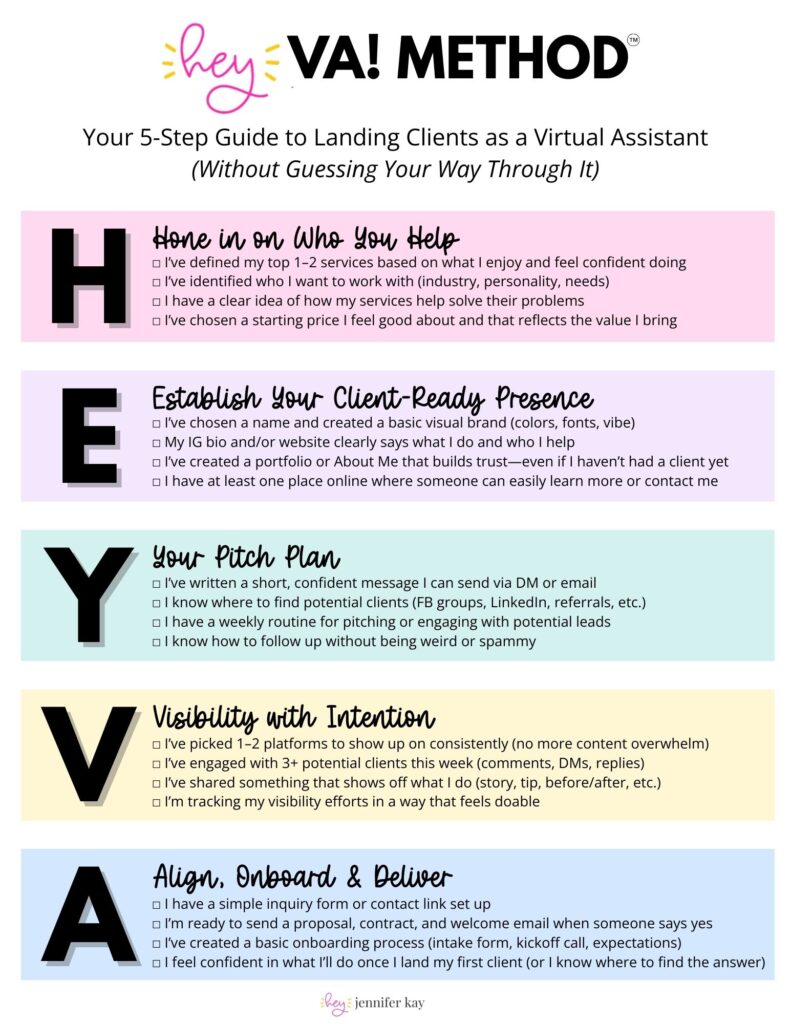
The Hey VA Method breaks down everything you need to do to land your first client – from figuring out what to offer, to building your presence, to actually pitching. No guessing, no overwhelm. Just check off the boxes and go!!
The Cons of Being a Virtual Assistant
Okay, now for the stuff no one talks about in those “quit your 9-5” posts.
Income Can Be Unpredictable at First
When you have a salaried job, you know exactly how much money is hitting your bank account every two weeks. As a VA? Not so much.
Some months you might make $3,000. Other months you might make $1,200 because a client paused their retainer or you lost a client and haven’t replaced them yet.
This unpredictability can be stressful, especially if you’re the primary breadwinner or you have bills that don’t care about your income fluctuations.
The good news? Once you build up a steady client roster and use retainer or package pricing, your income becomes way more predictable. But in the beginning, it can feel like a rollercoaster.
You’re Running a Business (With All the Responsibilities)
Being a VA means you’re self-employed. That sounds fun until you realize it also means you’re responsible for:
Finding your own clients. No one is handing you work. You have to go get it.
Managing your own taxes. You’ll need to set aside money for quarterly tax payments and figure out deductions.
Tracking your own income and expenses. Invoicing, bookkeeping, all of it falls on you.
Providing your own benefits. Health insurance, retirement savings, paid time off—none of that exists unless you create it yourself.
It’s a lot. And if you’re someone who thrives with structure and clear instructions, the lack of a “boss” can feel more overwhelming than freeing.
It Can Be Lonely
If you’re coming from an office job where you had coworkers to chat with, grab lunch with, and vent to, working as a VA can feel isolating.
You’re working solo most of the time. Your clients aren’t your friends (even if they’re friendly). You might go days without real face-to-face interaction.
Some VAs love this. Introverts, especially. But if you’re extroverted or you thrive on social interaction, the loneliness can hit hard.
The solution? Join online communities (like a VA Facebook group or a coworking space), schedule virtual coffee dates with other VAs, or work from coffee shops a few days a week. But you have to be intentional about it.
Clients Don’t Always Respect Boundaries
Just because you work from home doesn’t mean you’re available 24/7. But some clients will act like you are.
Late-night texts. Weekend emails. Requests that weren’t in the original scope of work. It happens.
The key is setting clear boundaries from day one (with your contract and your communication) and sticking to them. But enforcing boundaries can feel uncomfortable, especially when you’re new and worried about losing a client.
You Have to Hustle for Your Own Clients
No one is going to hand you a client roster. You have to go find them.
That means networking, pitching, posting on social media, joining Facebook groups, reaching out to your network—whatever it takes to get in front of potential clients.
For some people, this is exciting. For others, it’s terrifying.
If the idea of “selling yourself” makes you want to hide under a blanket, being a VA might feel harder than you expected. (Though you can absolutely learn how to pitch without feeling sleazy. It just takes practice.)
Who Should Become a Virtual Assistant?
Being a VA is a great fit if you:
Value flexibility over stability. You’re okay with income fluctuations if it means you control your schedule.
Are self-motivated. You don’t need a boss hovering over you to stay productive. You can manage your own time and meet deadlines without external pressure.
Like variety. You’re not looking to do the exact same tasks every single day. You enjoy learning new tools, working with different clients, and switching between projects.
Already have some marketable skills. You don’t need to be an expert, but if you’re decent at email management, social media, tech troubleshooting, or creative work, you’ve got a head start.
Want to work from home. Whether it’s to save on childcare, avoid a commute, or just work in your pajamas, remote work appeals to you.
Are willing to hustle upfront. You understand that landing your first few clients takes effort, but you’re ready to put in the work to build something sustainable.
Who Should Skip the VA Route (For Now)?
Being a VA might not be the best fit if you:
Need a guaranteed paycheck every month. If the thought of fluctuating income gives you serious anxiety, you might want to build up a financial cushion before going full-time as a VA (or keep it as a side hustle).
Hate the idea of self-promotion. You’re going to have to market yourself. If that sounds like actual torture, VA work will feel harder than it needs to be.
Struggle with time management. If you procrastinate or have trouble staying on task without someone checking in on you, working independently might not feel great.
Need a lot of structure and external accountability. Some people thrive with a boss, clear KPIs, and a defined role. If that’s you, freelancing might feel too chaotic.
Don’t enjoy admin or client-facing work. If the idea of managing someone’s inbox or scheduling their calendar sounds like a nightmare, being a VA probably isn’t your calling.
So… Is Being a Virtual Assistant Worth It?
Here’s the bottom line: Being a virtual assistant is worth it if you’re willing to treat it like a real business, not a side hobby!
It’s worth it if you want flexibility, control over your income, and the ability to work from home without sacrificing your earning potential.
But it’s not a magic solution. It takes effort to land clients, build systems, and manage your business. The freedom is real, but so is the responsibility.
If you’re ready to put in the work, being a VA can be one of the most rewarding career moves you make. You’ll have more control over your time, your income, and your life than you ever did in a traditional job.
And if you’re wondering where to start, the 14-Days to VA Roadmap gives you the exact roadmap to go from “thinking about it” to landing your first paying client in 14 days. No fluff, no guessing, just the step-by-step plan to make this real!
Share This Post:
Email
Facebook
Pinterest
Twitter
You might also like...
Think email marketing is outdated? Think again. Building an email list is one of the most powerful ways to land consistent VA clients without chasing them on social media. This post breaks down exactly how to start, grow, and use your email list to fill your calendar with dream clients!
Pitching yourself as a virtual assistant shouldn’t feel gross or pushy. But if you’re staring at a blank email wondering how to sound professional without sounding like a used car salesman, you’re not alone. This post gives you the exact framework (and copy-paste templates) to pitch your VA services confidently—without the ick factor!
Struggling to keep track of client projects, deadlines, and your own to-do list? You need a project management tool that actually works for VA life. This post breaks down the best options (ClickUp, Asana, Trello, Monday.com, and more), what each one does well, and how to pick the right one for your business.
Wondering where to find virtual assistant clients when you’re just starting out? Forget job boards that pay $5/hour. This post breaks down 5 real places to find quality clients who actually pay what you’re worth—from Facebook groups to warm outreach. You’ll walk away with a game plan to land your first (or next) client!
Tired of competing on price as a general VA? Specializing as a virtual assistant lets you charge package rates, attract better clients, and actually scale your business. This post breaks down the best specializations to consider, how to learn the skills, and how to position yourself as an expert—even if you’re brand new!
Is being a virtual assistant worth it? If you want flexibility and real income without leaving your house, yes. But it’s not all laptop-on-the-beach vibes. This post breaks down the honest pros, the real cons, and who this career is (and isn’t) perfect for. You’ll walk away knowing if the VA life is your next move.
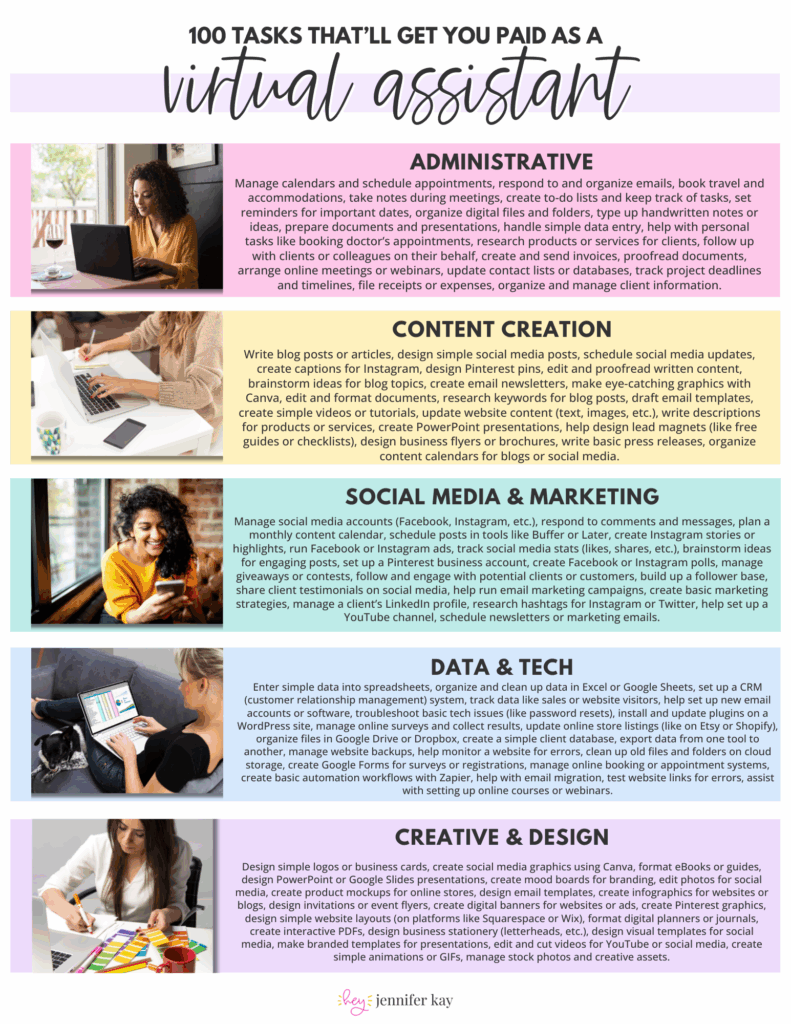
 100 Tasks VAs are Getting Paid to Do –