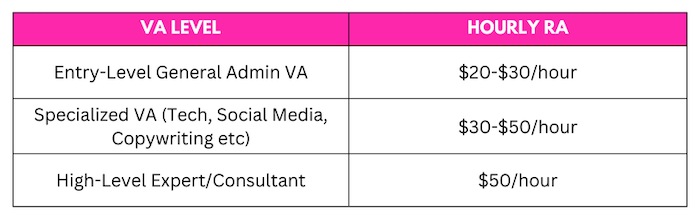
Let’s talk real numbers. This VA pricing guide is your no-fluff breakdown of how to stop undercharging and start setting rates that actually pay the bills. I’ll walk you through how to calculate what to charge, what most beginner VAs should be making, and how to shift from hourly to package pricing without freaking out. No guesswork, no guilt—just smart pricing that works.
Table of Contents
Let’s talk about the biggest mistake new VAs make when setting their rates: undercharging out of fear.
I see it all the time—brand-new virtual assistants pricing themselves at $10-$15/hour because they think: ✅ “I need to start low to get clients.” ✅ “I don’t have experience, so I can’t charge much.” ✅ “If I charge too much, no one will hire me.”
Hot take: Charging low rates isn’t a “smart way” to get clients—it’s a fast track to burnout, resentment, and clients who don’t value your time.
This VA pricing guide will walk you through how to price your virtual assistant services correctly so you actually make money (without) scaring off potential clients.
How to Calculate Your Virtual Assistant Rates (Without Guessing)
Tip #1: Start With What You Already Know
Here’s the hard truth: Most new VAs pick a random number instead of calculating a sustainable rate.
But pricing yourself correctly isn’t a guessing game—it’s math. Here’s a simple way to calculate your minimum hourly rate:
1. Set Your Monthly Income Goal
How much do you need to actually make? Consider:
Personal expenses (rent, groceries, bills)
Business expenses (software, website, taxes—yes, you need to plan for these)
Profit margin (because you’re not just working to break even)
Example: You want to make $3,000/month after taxes and expenses.
2. Determine Your Billable Hours
You’re not working 40 billable hours a week. Running a business means time for admin tasks, marketing, and client communication.
A more realistic estimate: 20-25 billable hours per week.
Hourly vs. Package Pricing – Which is Best for a New Virtual Assistant?
Hourly pricing is fine when you’re starting, but it has one big flaw—you’re trading time for money. The more efficient you become, the less you get paid.
Here’s a better approach: transition to package pricing as soon as possible.
When to Start Hourly:
You’re still figuring out how long tasks take.
You want to gain experience without over-promising.
Why You Shouldn’t Stay Hourly Forever:
Hourly pricing limits your earning potential.
Clients start tracking every minute (which gets annoying).
Package pricing lets you charge based on value, not time.
How to Transition to Package Pricing (Even as a Beginner VA)
Track how long tasks take so you can price effectively.
Create small service packages (Example: 10 hours/month for $500).
Focus on the outcome clients want, not just the tasks.
For example, instead of: “$30/hour for social media management”
Try: “$500/month for 3 posts per week, engagement, and analytics tracking.”
Hot take: “I don’t know how long tasks take” is not a reason to avoid package pricing—just start tracking and adjust as needed.
Final Thoughts: What Should You Charge as a Beginner VA?
Your rate should reflect your value, not your insecurities.
VA pricing is fluid—start strong and increase as you gain experience.
Avoid pricing traps like undercharging, offering discounts out of fear, or thinking you need to be “cheap” to land clients.
Share This Post:
Email
Facebook
Pinterest
Twitter
You might also like...
Think email marketing is outdated? Think again. Building an email list is one of the most powerful ways to land consistent VA clients without chasing them on social media. This post breaks down exactly how to start, grow, and use your email list to fill your calendar with dream clients!
Pitching yourself as a virtual assistant shouldn’t feel gross or pushy. But if you’re staring at a blank email wondering how to sound professional without sounding like a used car salesman, you’re not alone. This post gives you the exact framework (and copy-paste templates) to pitch your VA services confidently—without the ick factor!
Struggling to keep track of client projects, deadlines, and your own to-do list? You need a project management tool that actually works for VA life. This post breaks down the best options (ClickUp, Asana, Trello, Monday.com, and more), what each one does well, and how to pick the right one for your business.
Wondering where to find virtual assistant clients when you’re just starting out? Forget job boards that pay $5/hour. This post breaks down 5 real places to find quality clients who actually pay what you’re worth—from Facebook groups to warm outreach. You’ll walk away with a game plan to land your first (or next) client!
Tired of competing on price as a general VA? Specializing as a virtual assistant lets you charge package rates, attract better clients, and actually scale your business. This post breaks down the best specializations to consider, how to learn the skills, and how to position yourself as an expert—even if you’re brand new!
Is being a virtual assistant worth it? If you want flexibility and real income without leaving your house, yes. But it’s not all laptop-on-the-beach vibes. This post breaks down the honest pros, the real cons, and who this career is (and isn’t) perfect for. You’ll walk away knowing if the VA life is your next move.
 100 Tasks VAs are Getting Paid to Do –